



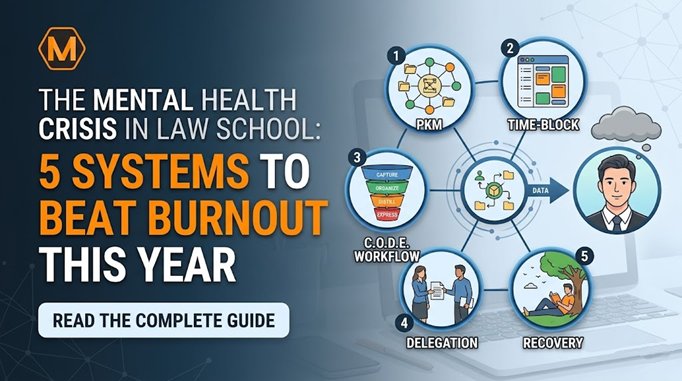
The legal profession has long been defined by a culture of relentless intellectual rigor and high-stakes competition. For the modern law student, this environment often transforms into a psychological pressure cooker, fueled by the Socratic Method, curve-based grading, and the looming anxiety of the Bar Exam. Research consistently indicates that individuals in JD programs experience significantly higher rates of clinical distress than their peers in other graduate disciplines. In 2026, the integration of Generative AI and rapid-fire digital research has only accelerated the expected pace of output, pushing many students toward a state of chronic burnout.
To survive this landscape, a transition from “brute force” studying to a sophisticated resource management mindset is mandatory. This involves recognizing when to seek expert guidance, such as utilizing a professional assignment writing service like myassignmenthelp to manage the overwhelming burden of non-core elective drafting. By treating legal education as a marathon of cognitive endurance rather than a sprint of sleepless nights, students can protect their mental health while maintaining the GPA required for elite clerkships. The following five systems are designed to automate the routine, optimize the complex, and ensure that the modern law student remains resilient.
1. The “Second Brain” PKM Framework
The most pervasive cause of law school burnout is “Information Overload.” A standard curriculum requires the digestion of thousands of pages of case law, much of which must be cross-referenced for final outlines. Traditional, linear note-taking is no longer sufficient for the 2026 legal landscape. Instead, high-performing students are adopting Personal Knowledge Management (PKM) systems like Obsidian or Notion to build a “Digital Second Brain.”
By using a “Zettelkasten” method—where every legal principle is treated as a discrete, linked note—you move the burden of memory from your biological brain to a searchable digital database. This system allows you to visualize the “connective tissue” between Property Law and Contracts without having to manually flip through hundreds of pages of highlighted text. When your notes are networked, outlining for finals becomes a process of assembly rather than a desperate act of creation, significantly reducing mid-semester anxiety.
| Feature | Traditional Note-Taking | PKM “Second Brain” System |
| Structure | Linear / Chronological | Networked / Atomic |
| Searchability | Low (Physical or PDF search) | High (Bidirectional linking) |
| Cognitive Load | High (Requires active recall) | Low (Outsourced to digital vault) |
| Outcome | Static Outline | Living Knowledge Graph |
2. Algorithmic Time-Blocking vs. The “Library Trap”
Many law students fall into the “Library Trap,” spending twelve hours a day in a cubicle but only achieving three hours of true “Deep Work.” This inefficiency is a primary driver of exhaustion. To combat this, you must implement an algorithmic time-blocking system that accounts for your “Circadian Peak.”
Identify the specific window of the day when your analytical focus is sharpest—usually early morning or late evening—and reserve that time exclusively for “Case Briefing” and “Statutory Analysis.” Routine tasks, such as administrative emails or formatting citations, should be relegated to your “low-energy” windows. By treating your time as a finite legal asset, you prevent the “leakage” that leads to 2 a.m. study sessions. A disciplined schedule that includes mandatory “blackout zones” for exercise and social interaction is not a luxury; it is a professional necessity for long-term cognitive health.
3. The “C.O.D.E.” Workflow for Legal Research
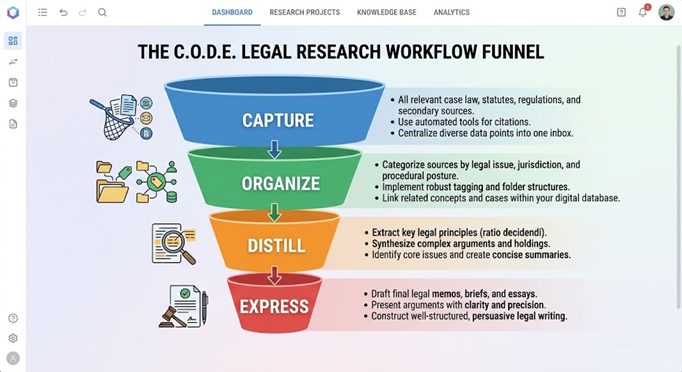
Research is the backbone of legal education, yet it is also the most time-consuming aspect of any JD program. The C.O.D.E. (Capture, Organize, Distill, Express) workflow, popularized by productivity experts, is perfectly suited for the law school environment.
- Capture: Use automated tools to grab case citations and relevant statutes immediately.
- Organize: Tag findings by legal “Entity” (e.g., Tort, Negligence, Proximate Cause).
- Distill: Summarize the Ratio Decidendi (the reason for the decision) in a single, clear sentence.
- Express: Convert your distilled notes into a working outline or draft.
This systematic approach prevents “Blank Page Syndrome,” which often leads to procrastination and eventual burnout. When you have a clear pipeline for research, the daunting task of a 40-page seminar paper becomes a series of manageable, low-stress micro-tasks.
4. Strategic Delegation and Resource Management
One of the most valuable lessons a future lawyer can learn is the art of delegation. In a professional firm setting, a senior partner does not spend their time on basic document formatting or initial case summaries; they delegate those tasks to paralegals and associates so they can focus on high-level litigation strategy. Law students must adopt a similar mindset to survive the sheer volume of their curriculum.
Managing a full course load alongside internships and Law Review often requires external assistance. Utilizing a specialized law assignment writing service allows students to see a high-standard “model” of how a complex legal prompt should be structured, cited, and argued. This strategic use of resources is what separates those who burn out from those who graduate at the top of their class.
4. The “Model-First” Methodology
This methodology focuses on using expert-crafted templates to understand the “IRAC” (Issue, Rule, Application, Conclusion) structure more deeply. Instead of spending 20 hours struggling with a topic you haven’t yet mastered, studying a professionally drafted response can provide the “Information Gain” needed to produce your own high-quality work in half the time. By observing how seasoned writers handle complex legal nuances, you bypass the trial-and-error phase that typically leads to academic fatigue.
5. Biological Regulation: The Dopamine Reset
The final system is not digital, but biological. Law school encourages a “high-cortisol” lifestyle, where students are constantly “on,” checking grades or case updates. This leads to a fried dopamine system, making it impossible to focus on dense legal texts for long periods.
Implementing a “Digital Sabbath”—24 hours a week with zero legal research and zero screens—allows your prefrontal cortex to recover. Studies have shown that brief periods of “boredom” or non-directed thought actually improve complex problem-solving skills. For a law student, a Saturday spent in the real world is more productive for their “Legal Mind” than a Saturday spent staring at a LexisNexis screen in a windowless basement.
The Ethics of Modern Productivity
As we discuss these systems, we must address the ethical framework of modern legal study. Some may argue that delegating research or using specialized drafting support is a shortcut. However, in the 2026 legal market, the ability to manage resources and leverage specialized services is considered a core competency. A lawyer who tries to do everything themselves is a lawyer who commits malpractice due to exhaustion. By learning these delegation skills now, you are preparing for the reality of high-level legal practice.
Comparative Analysis: Productivity Systems
| System Name | Primary Benefit | Implementation Difficulty |
| PKM (Second Brain) | Eliminates “Information Overload” | High (Initial Setup) |
| Time-Blocking | Maximizes Deep Work output | Medium (Requires Discipline) |
| C.O.D.E. Workflow | Simplifies complex research | Low (Process Change) |
| Strategic Delegation | Reduces overall Cognitive Load | Low (Requires Budget/Resource) |
| Dopamine Reset | Restores long-term focus | Medium (Social Pressure) |
Conclusion: Redefining Academic Success
The mental health crisis in law school is a call to action for students to redefine what “success” looks like. Ranking at the top of your class should not come at the cost of your long-term psychological well-being. By adopting PKM frameworks, algorithmic time-blocking, and strategic delegation through trusted services like myassignmenthelp, you are not just surviving law school; you are training yourself to be a high-functioning, resilient legal professional.
As you move through this academic year, remember that the goal is not to work harder than everyone else—it is to work smarter. Use the systems available to you, protect your “Cognitive Load,” and understand that seeking support is a sign of professional maturity, not academic weakness. Burnout is avoidable, but only if you have the systems in place to catch you before you fall. Success in the law is a game of longevity; ensure you have the mental
Frequently Asked Questions
1. How does a “Digital Second Brain” prevent academic burnout?
By offloading the storage of complex legal cases and statutes to a networked digital system, you reduce the cognitive load required to remember every detail. This allows your mind to focus on high-level analysis and critical thinking rather than simple memorization.
2. What is the most effective way to manage a heavy research workload?
Adopting a structured workflow—such as the Capture, Organize, Distill, and Express (C.O.D.E.) method—breaks down massive projects into smaller, manageable tasks. This systematic approach eliminates the anxiety of starting from scratch and ensures consistent progress.
3. Why is “Deep Work” more important than total hours spent studying?
Long hours in the library often lead to diminishing returns due to fatigue. Focusing on high-intensity “Deep Work” during your peak mental hours ensures that you achieve better results in less time, leaving room for necessary rest and recovery.
4. How can delegation improve long-term professional success?
Learning to delegate routine or administrative tasks is a core skill used by successful legal professionals. By strategically managing your resources and seeking expert support for non-essential drafting, you preserve your mental energy for the most critical aspects of your education and career.
About The Author
Jack Williams is a Senior Content Architect and educational strategist at MyAssignmentHelp. With a focus on academic workflows and professional productivity, Jack specializes in helping students navigate complex research challenges through structured, systems-based learning. When he isn’t developing long-form educational guides, he can be found exploring the intersection of technology and cognitive performance.